Choosing the right POS inventory system is essential for keeping your shelves stocked, avoiding missed sales, and syncing data across locations or channels. The best POS systems don’t just process payments; they also act as inventory POS software with tools like barcode scanning, low-stock alerts, and multi-location tracking.
Whether you run a boutique shop, a multi-store retailer, or a restaurant that needs ingredient-level tracking, a good POS system with inventory management helps streamline operations and cut costs. We compared today’s top POS systems for inventory on features, pricing, and ease of use to help you find the best fit for your business.
Featured Partners
Fit Small Business is able to offer our services for free because some vendors may pay us for web traffic or other sales opportunities. Our mission is to help technology buyers make better purchasing decisions, so we provide you with information for all vendors — even those that don’t pay us.
1
Square
Employees per Company Size
Micro (0-49), Small (50-249), Medium (250-999), Large (1,000-4,999), Enterprise (5,000+)
Any Company Size
Any Company Size
Features
Barcode Scanning, Cash Management, Customer Management, and more
2
Toast
Employees per Company Size
Micro (0-49), Small (50-249), Medium (250-999), Large (1,000-4,999), Enterprise (5,000+)
Any Company Size
Any Company Size
Features
Barcode Scanning, Cash Management, Customer Management, and more
3
Clover
Employees per Company Size
Micro (0-49), Small (50-249), Medium (250-999), Large (1,000-4,999), Enterprise (5,000+)
Any Company Size
Any Company Size
Features
Barcode Scanning, Cash Management, Employee Management, and more
Best POS inventory systems compared
Many of the POS inventory systems in this guide are also listed among the best POS systems for small businesses.
Lightspeed Retail: Best overall POS inventory system

Pros
- Customizable matrix inventory with variants and assembled products
- Built-in purchase ordering, vendor directory, and product catalogs
- Work orders and customizable reports
Cons
- No free plan; software and hardware can get expensive for small businesses
- Complex user interface
- No tracking for perishable inventory
Lightspeed Retail overview
Who should use it:
Businesses with large or complex inventories that need advanced stock control, custom product variants, purchase ordering, and detailed reports
Why I like it:
Lightspeed Retail is one of the best POS inventory systems for businesses that need more than basic tracking. It supports granular stock management, purchase orders, forecasting, and a powerful reporting suite. As a cloud-based POS inventory system, it also handles multi-location inventory and integrates payments, with 24/7 chat support included.
For example, a boutique with three stores can check real-time stock across all locations, transfer items when one store runs low, and forecast which products to reorder before peak season, helping reduce both stockouts and overordering.
However, advanced inventory tools require higher-tier plans, and there’s no free option (only a trial). If you need a free POS system with inventory management, Square is better. For markets or grocers needing expiration-date tracking, IT Retail is the stronger choice.
- Monthly software fees:
- Free trial: 14 days
- Basic: $109 (monthly) or $89 (annually)
- Core: $179 (monthly) or $149 (annually)
- Plus: $339 (monthly) or $289 (annually)
- Enterprise: Custom quote
- Lightspeed Payments processing fees:
-
- In-person: 2.6% + 10 cents 2.6% + 10 cents
- Online: 2.9% + 30 cents
- Volume discount: For retailers processing more than $250,000
- Customizable matrixes: Sell unique product variations that are bundled and serialized, or case-broken to sell various quantities of the same product.
- Work order management: Process and follow work orders in the POS system.
- Categorization and tracking: Use serial numbers and/or stock-keeping units (SKUs) to identify each piece of inventory.
- Integrated vendor catalogs: With more than 3,000 preloaded catalogs, you can upload up to 10,000 items, consolidate all purchases into one order, set custom reorder points, and fulfill special orders for customers.
- Detailed analytics: Get more than 40 built-in reports, plus customizable settings, data visualizations, and actionable tips.
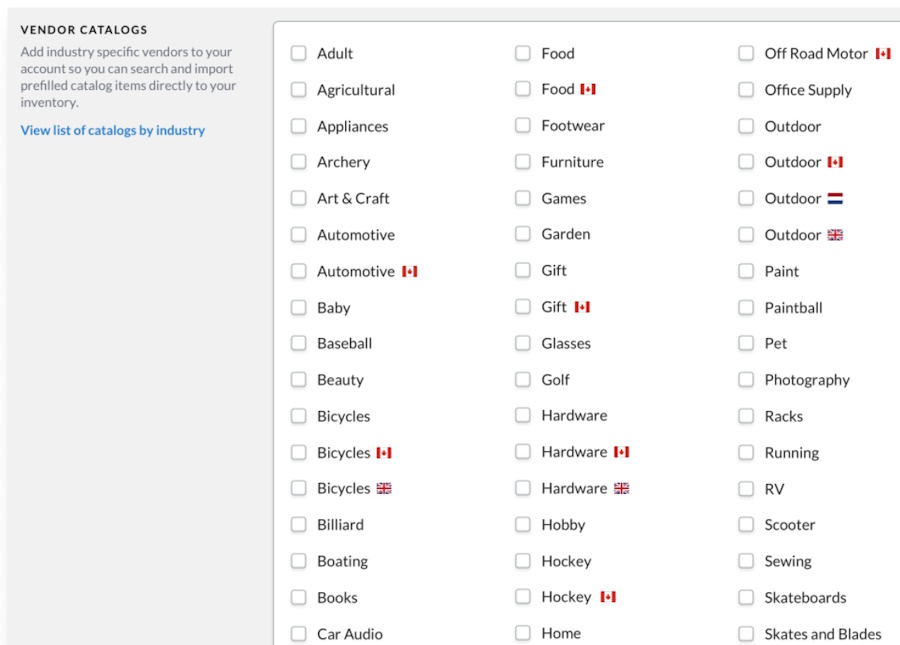
With Lightspeed Retail, you can access and view vendor catalogs from multiple suppliers and industries. You can also search for specific products, edit product information, and import item details into your inventory (Source: Lightspeed)
Square: Best free inventory POS for new and small businesses

Pros
- Free basic POS for unlimited locations and users
- Industry-specific POS software for restaurants, retail, and service businesses
- Free Square Online store with every account
Cons
- Advanced inventory features only available in higher plans
- Limited and inconsistent customer support
- Limited customization options for website and POS
Lightspeed Retail overview
Who should use it:
New or small businesses on a tight budget that want a free POS system with inventory management and scalable features
Why I like it:
Square is one of the best POS systems for small businesses with inventory, thanks to its free plan, which includes product catalogs, sales-based stock counts, customer management, and an online store builder. Paid plans add advanced tools like barcode printing, vendor management, and inventory counting, while integrations expand functionality with expiration tracking and custom reports.
For example, a coffee cart or small boutique can start free with Square, track products as they sell, and upgrade later to get barcode scanning and purchase order tools as the business grows.
The trade-offs: Square’s reporting is less customizable in its mobile app, and phone support can be inconsistent. It’s best for small retail shops or service businesses, but retailers with thousands of SKUs should consider Lightspeed Retail, while restaurants needing ingredient-level tracking will be better served by Lightspeed Restaurant.
Monthly software fees:
- Square POS: Free
- Square for Retail: $0-$89 per location
- Square for Restaurants: $0-$165+ per location
- Square Appointments: $0-$69 per location
- Contract length: Month-to-month
Square Payments processing fees:
- In-person: 2.6% + 15 cents
- Online: 2.9% + 30 cents
- Payment links and invoices: 3.3% + 30 cents
- Manually entered: 3.5% + 15 cents
- Afterpay: 6% + 30 cents
- Volume discounts: Custom pricing is available for businesses processing more than $250,000 annually.
See our guide to Square Pricing and Fees for more pricing information.
- Free features: The basic Square POS inventory supports unlimited SKUs and item categories, tracks inventory in real-time across unlimited locations, and can even auto-generate new items from scanned barcodes.
- Square for Retail Plus: The highest-level Square subscriptions offer expanded inventory tools. Plus users can receive stock shipments, adjust stock levels for returns and exchanges, create and send POs by email, create vendor lists, create item libraries for each vendor, track inventory value by item, and view cost of goods sold and other advanced reports.
- Integrated ecommerce site: All Square accounts come with the free Square Online store. You can quickly build your site using Square’s setup wizard and host it on your own domain or for free on a Square-affiliated domain. Your stock levels sync across your Square system, so if you sell out of an item in-store, your online store updates automatically. We’ve put together a full review of Square Online.
- Inventory management: While not as extensive as Lightspeed’s inventory tools, Square is no slouch with inventory management. You can track your products in real time, import items in bulk and adjust quantities, automate purchase orders, manage multilocation inventory, and receive daily emails that detail low-stock products. You can even custom set your low-stock alert quantity for each product so you never miss a beat.
- Mobile app: Download the Square mobile app to turn any phone or tablet camera into a barcode scanner — perfect for making sales on the go or performing inventory counts.
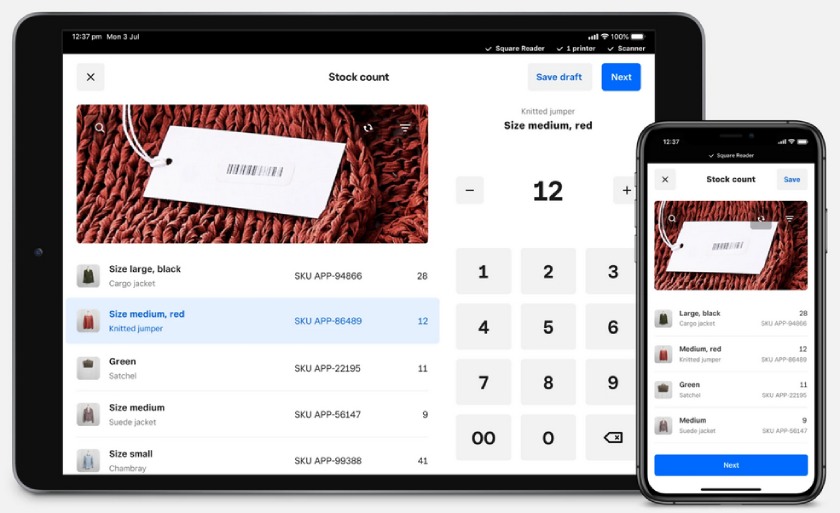
Using Square’s Stock Count tool, you can count stock and update quantities directly in your POS (requires a Plus-level subscription). (Source: Square)
Lightspeed Restaurant: Best for restaurants

Pros
- Ingredient-level tracking with low-stock alerts
- Vendor management and purchase orders
- Customizable inventory fields
Cons
- Raw API access only available at highest subscription tiers
- Expensive monthly subscriptions
- Offline functionality not as strong as in other systems
Lightspeed Restaurant overview
Who should use it:
Restaurants of any size, from cafes to full-service operations, that need ingredient-level inventory tracking and automation
Why I like it:
Lightspeed Restaurant is a cloud-based POS system with inventory management built specifically for food service. Its inventory tools go beyond simple stock counts to track ingredients, trigger low-stock alerts, and even auto-generate vendor orders when supplies run low. Since acquiring Upserve, Lightspeed has added stronger automation and reporting, including COGS analysis. Most features are available even in the entry plan.
For example, a busy bistro can set thresholds for staples like olive oil or flour and rely on the system to reorder automatically, helping managers avoid last-minute supplier runs.
The drawback is price: advanced features like custom payment processing rates and API access require higher-tier plans at $189–$399 per month. If you want a more affordable or free restaurant POS with inventory tracking, Square for Restaurants is a better option.
- Monthly software fees:
- Essential: $189
- Premium: $399
- Enterprise: Custom-quoted
- Lightspeed Payments processing fees:
- In-person: 2.6% + 10 cents
- Online: 2.9% + 30 cents
- Volume discount: For retailers processing more than $250,000
- Custom processing rates: Available in the Premium subscription
- Flexible hardware: You can operate Lightspeed Restaurant on your internet browser or iOS device, including smartphones. Managers can view reports and process orders and payments tableside or at offsite events. You can also view and edit purchase orders, receive stock, add suppliers, and add barcodes to track and scan inventory items.
- Easy physical counts: You can create custom count sheets that match each of your storage areas and count items by barcode scan or tablet or use the free inventory smartphone app for Android or iOS smartphones.
- One-click reordering: Once you set order points and enter all your vendor information, your Lightspeed Restaurant POS will automatically generate suggested orders when you run low on stock. Orders are arranged by vendor, and you can place simultaneous orders with multiple vendors by clicking a single button.
- Recipe cost calculations: Lightspeed will estimate the cost per recipe and its margins based on its ingredients/ingredient-level price fluctuations and its menu price
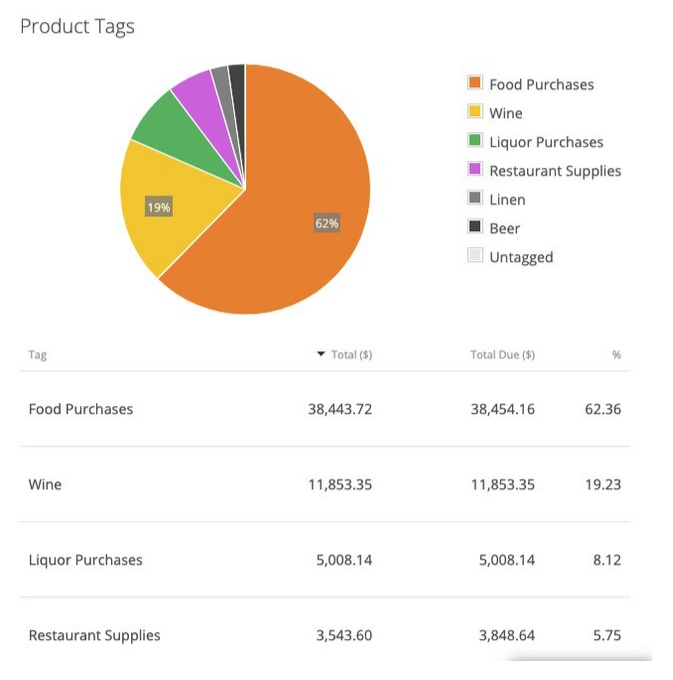
Lightspeed Restaurant inventory tools (via Upserve) let you modify stock counts from multiple devices and provide reports on food costs and profits. You can also create suppliers and catalogs, and use tags to group related products together. (Source: Lightspeed)
IT Retail: Best for grocers and markets

Pros
- Industry-grade hardware stands up to high-volume use
- Tracking of expiration dates of perishable items
- Case-breaking for case and individual bottle sales supported
Cons
- Hardware prices not listed publicly
- No free trial or free plan
IT Retail overview
Who should use it:
Markets, grocers, and specialty food stores that need POS inventory software with expiration-date tracking, lot management, and scale integration
Why I like it:
IT Retail is purpose-built as a grocery POS inventory system, offering tools most general POS software lacks. It supports EBT and WIC compliance, integrates with scales, and tracks both perishable and non-perishable items. A standout feature is its ability to monitor products by lot and expiration date, crucial for preventing spoilage and ensuring food safety.
For example, a neighborhood market can set up IT Retail to flag dairy products nearing expiration, discount them automatically, and reorder replacements through vendor purchase orders. This helps reduce waste and protect margins.
The trade-offs: IT Retail doesn’t offer a free plan or trial, and it doesn’t support high-risk businesses like vape shops. It’s also not suited for restaurants that need ingredient-level tracking. In those cases, Lightspeed Restaurant is the better fit.
Monthly software fees:
- IT Retail Subscription Plans:
- Starter: $49
- Growth: $99
- Premium: $149
- Customized Plan: Add POS hardware kits, accessories, and add-ons to your software subscription for a custom price
- Installation fee: Optional, custom-quoted
IT Payments processing fees: Rates vary by business type, sales volume, and card mix. Flat and interchange-plus rates are available. IT Retail does not disclose processing rates on its website.
- Purchase order management: You can create POs in your IT Retail dashboard based on low stock alerts or generated from completely new items. You can choose to receive stock with or without an accompanying order, and can also create an invoice after you pay the supplier.
- Shrinkage tracking: IT Retail generates a shrinkage calculation by comparing your sold items with items received and previous inventory counts. This can alert you quickly to spoilage, breakage, or theft.
- Lot and expiration date tracking: Expiration date tracking helps your team adhere to the principle of first-in, first-out (FIFO). It also ensures that you sell items before they expire so you can make your expected profit margin and keep your sales on track.
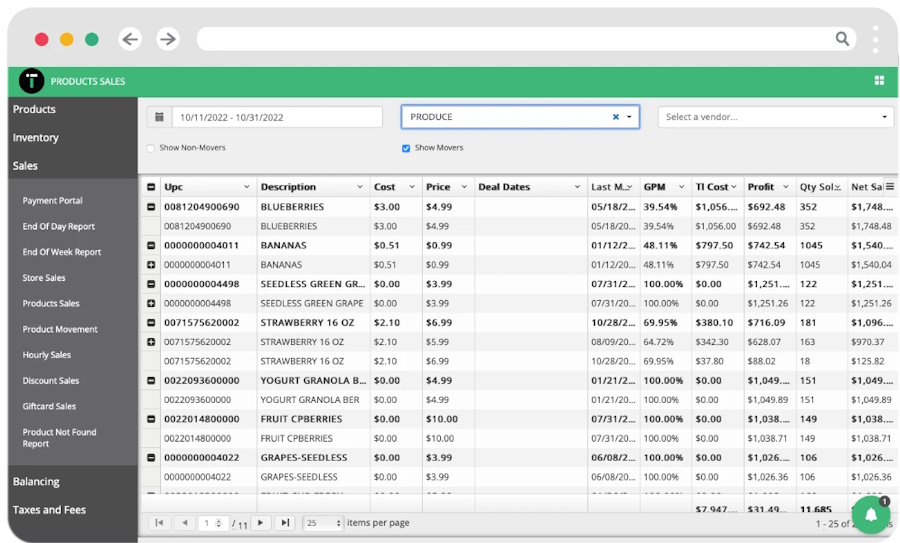
IT Retail’s inventory management tools let you create purchase orders, receive items, get alerted when stock is low, view individual items, and edit products in bulk. (Source: IT Retail)
Shopify: Best for multichannel sellers

Cons
- No automation features
- Payment processing fees can get high
- Limited offline capabilities
Shopify overview
Who should use it:
Retailers that sell both online and in-store and need a multichannel POS inventory system with centralized management
Why I like it:
Shopify POS stands out for its cross-channel inventory tracking, letting businesses manage stock across online and physical locations from a single dashboard. It includes multilocation controls, purchase ordering tools, barcode scanning, and detailed inventory reporting, all within a user-friendly POS app. With integrations, you can also add niche functions like perishable inventory tracking. Shopify’s cloud-based POS inventory system comes with 24/7 support.
For example, a small clothing brand can sync its website and retail shop inventory so online orders automatically deduct from in-store stock, preventing overselling.
The drawbacks: Shopify doesn’t offer a free POS plan, its free trial is short, and some advanced tools like low-stock alerts require third-party apps.
- Monthly software fees:
- Free trial: 3 days, and then $1 for the first month
- Starter/POS Lite: $5
- Retail/POS Pro: $89
- Shopify Payments processing fees (depends on plan):
- In-person: 2.4% + 10 cents to 5%
- Online: 2.5% + 30 cents to 5% + 30 cents
- Omnichannel selling: Centralized inventory management allows for easy omnichannel transactions, including buy online, pick up in-store; buy online, return/exchange in-store; and buy in-store, ship to customer.
- Smart inventory management and status tracking: Transfer products between locations, perform quick counts using a barcode scanner, and receive orders with a barcode scanner. Track and share the status and location of products as they are received and transferred, and as orders are fulfilled.
- Purchase ordering: Create and manage POs; track vendors and suppliers.
- Stocky app: Stocky is an inventory management app by Shopify for POS Pro users. Many of the Shopify inventory features can be managed through Stocky.
- Shipping labels: Browse discounted shipping rates from all major carriers and print your package label right from your account.
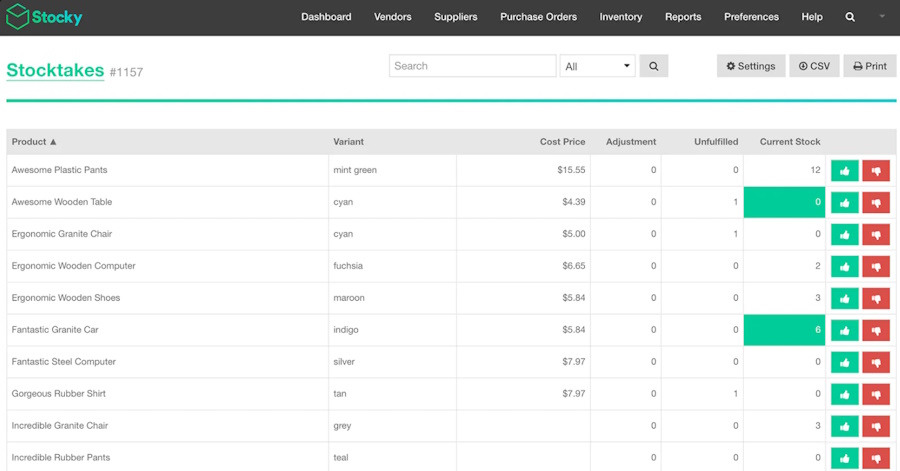
The Stocky app by Shopify allows users to access advanced inventory features: purchase orders, in-depth reports, stock levels, variants, and more. (Source: Shopify)
Revel Systems: Best for customization and multilocation management

Pros
- Detailed and extensive inventory tools
- Flexible payment processing options
- Good offline functionality
Cons
- All pricing is custom-quoted and not transparent
- No customized reports
- No perishables tracking
Revel Systems overview
Who should use it:
Multi-location restaurants, bars, and cafes that need a cloud-based POS inventory system with centralized reporting and flexible payment processing
Why I like it:
Revel Systems is a robust multi-location inventory POS system designed for food service. It offers ingredient-level tracking, purchase ordering, and low-stock alerts, plus centralized dashboards to manage menus, track stock, and view reports across multiple branches. Its offline mode ensures sales and inventory stay functional even if the internet goes down.
For example, a café chain with five locations can use Revel to update menus across all stores instantly, track ingredient usage in real time, and get consolidated reports on food costs and sales trends.
The main drawback is pricing. Plans are custom-quoted with no published rates, making it harder to compare upfront costs.
- All monthly pricing and payment processing rates are custom-quoted; call Revel Systems to get an exact figure.
- Payment processing options include Revel Advantage (the software’s built-in processor), First Data, Heartland, TSYS, and Worldpay.
- Inventory management: Revel’s inventory management tools include ingredient-level item tracking, product variants, automatic low-stock alerts, purchase orders, and an inventory management app that lets you scan items with your smartphone. You can also categorize and display inventory items in your POS by size and color.
- Multilocation management: As long as you have your iPad handy, you can access reports and menu controls, manage stock for multiple locations, monitor online ordering and delivery, and more—all from a centralized POS dashboard
- Mobile Order Taker: Provide your restaurant staff with a purpose-built mobile device for taking customer orders at tableside. The Revel Mobile Order Taker makes the ordering process faster and easier for both your employees and your customers. Staff can also check updated menus on the device, as well as send orders directly to the kitchen.
- Self-service kiosk: The Kiosk XT is Revel’s self-service solution that lets customers place orders and pay without any involvement from your staff. This not only reduces interpersonal contact (which some customers prefer) but also frees up your employees to perform other tasks. The Kiosk XT supports upsells and loyalty rewards and can accept Revel gift card payments.
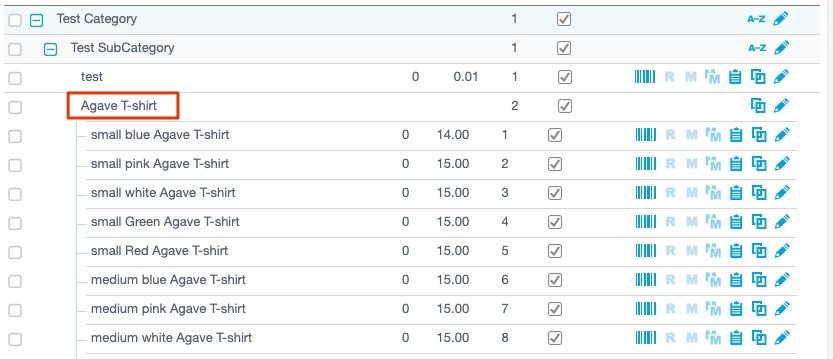
Revel’s matrix inventory features let you specify product variants or attributes such as size and color. (Source: Revel Systems)
What to look for in the best POS inventory system
Most POS systems include basic stock tools, but if you need a POS system with inventory management that can handle more complex operations, look for these features:
Maximum number of inventory items
Some POS inventory software offers unlimited product tracking, while others cap the number of items by plan. Free or entry-level tiers often limit inventory, while higher tiers unlock unlimited tracking. If you manage a large or varied catalog, make sure your plan can support it.
Locations and sales channel syncing
If you sell in multiple stores or online, choose a cloud-based POS inventory system with real-time syncing. Omnichannel syncing ensures inventory updates across all channels instantly and often lets you assign products to specific stores or warehouses—critical for businesses managing multiple locations or fulfillment centers.
Variants and modifiers
A strong inventory POS system should track product variations (sizes, colors, styles) and modifiers (like restaurant add-ons). Apparel retailers, for example, need size and color tracking, while restaurants need ingredient-based modifiers tied to menu items. Some systems include this in all plans, while others require upgrades or integrations.
Low stock alerts
A POS with low inventory notifications helps prevent stockouts by sending alerts when items fall below preset levels. Some platforms also connect alerts to purchase ordering tools, so you can automate vendor reorders and keep shelves stocked.
Inventory counting tools and hardware
The best POS inventory systems with barcode scanning simplify counts and reduce errors. Look for mobile apps, barcode scanning, or handheld counting tools. Check whether these are included or require extra hardware or paid add-ons.
Frequently asked questions (FAQs)
Click through the questions below to get answers to some of your most frequently asked POS inventory system questions.
A POS system combines hardware and software to process sales and payments, while an inventory system only tracks stock. Some businesses use manual tools like spreadsheets for inventory, but a POS with inventory management automatically updates stock levels as sales are made, eliminating the need for separate systems.
Yes. Even a basic POS can track stock as it sells. However, advanced businesses may need specialized features, like POS inventory software with barcode scanning, expiration date tracking, or product variants (sizes, colors, styles). Restaurants, for example, often need ingredient-level POS inventory tracking.
Lightspeed is widely considered the best POS inventory system for retail because it supports advanced stock controls, reporting, vendor catalogs, and purchase ordering. For restaurants, Lightspeed Restaurant is best for ingredient-level tracking, while Square is the best free POS system with inventory management for small businesses.
Using a POS inventory system keeps sales and stock levels in sync automatically. This ensures inventory updates in real time across all channels, both online and in-store, without manual work. It also reduces errors, prevents overselling, and helps businesses make smarter purchasing decisions.
A restaurant POS with inventory tracking should include ingredient-level controls, low-stock alerts, expiration management, and purchase ordering tools. These help food businesses minimize waste, reduce food costs, and stay compliant with health and safety standards.
Yes. Square offers a free POS inventory app with real-time stock tracking, barcode scanning, and an online store builder. Loyverse is another option for businesses looking for free POS inventory software.
Yes. A multi-location inventory POS system like Lightspeed Retail, Revel Systems, or Shopify POS lets you manage stock across multiple stores and warehouses, transfer inventory between locations, and view consolidated reports.
Many modern systems include low inventory notifications POS tools, which send alerts when stock hits a threshold. Some also automate vendor purchase orders to help prevent stockouts.
Bottom line
Every retail and restaurant business needs to process sales and reorder supplies and products. A POS inventory system allows businesses to handle all of those needs in one place—you can ring up sales, track products, analyze data, and reorder products easily.
Lightspeed Retail includes tools that let you manage large and complex inventories, create and view extensive reports, arrange purchase orders, and more. While you’ll need to pay for the higher plans in order to unlock more features, it’s hard to beat Lightspeed’s sheer inventory management power. Visit Lightspeed Retail and try out the system with a free trial.