Keeping paperwork in order is an important part of starting and running a business. Business documents form the legal and operational backbone of your company. They help you avoid fines or shutdowns, make better financial decisions, and stay organized as you scale.
According to U.S. Chamber of Commerce data, 51% of small business owners report that regulatory compliance requirements, such as licensing, permits, and record-keeping, are obstacles to growth. That underscores the high cost of letting documents slip out of date or unmanaged.
This guide covers the most critical types of business documents you need, when to update them, and how to manage them without getting overwhelmed.
Free download: Business documents checklist
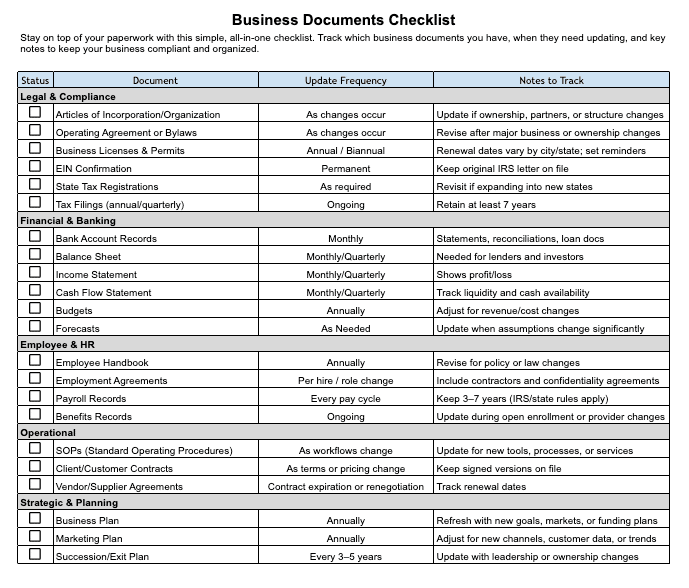
Managing documents becomes much easier when you have a single place to track them. To help, we’ve created a free checklist that organizes the most important business documents by category, along with when to update them and key notes to keep in mind.
Download our free template below and use it as a quick reference during your annual reviews or as part of your startup toolkit to make sure nothing falls through the cracks.
Thank you for downloading!
Legal and compliance documents
Every business, no matter how small, requires documentation that proves it exists legally and is authorized to operate. These documents aren’t just formalities; they’re the foundation of your company’s legitimacy. Without them, you can’t open a business bank account, apply for financing, sign contracts, or even keep your doors open in some states.
Keeping legal and compliance documents up to date also protects you from penalties, lawsuits, and compliance audits. For example, an expired business license can result in fines, and outdated incorporation papers can lead to disputes between partners or investors. Regularly reviewing these documents ensures that your business remains in good standing with local, state, and federal authorities, while also providing the credibility necessary to build trust with customers, vendors, and lenders.
Financial and banking documents
Strong financial records show exactly how money flows in and out, give you visibility into performance, and provide proof of stability when applying for loans or pitching to investors. Without accurate and updated financial documents, it’s nearly impossible to make informed decisions, prepare for tax season, or demonstrate creditworthiness.
Maintaining up-to-date banking and financial documents also protects you from cash flow surprises and compliance problems. Outdated statements or forecasts can lead to missed opportunities, overspending, or even IRS penalties. Keeping these documents current will help you get a clear picture of your business’s health, be better prepared for growth, and build trust with lenders, partners, and stakeholders.
Employee and HR documents
People are at the center of your business, and the documents that govern their roles, rights, and responsibilities are just as important as financial or legal paperwork. Employee and HR documents protect you from compliance issues, help establish clear expectations, and create consistency in how your team is managed.
Keeping these documents current ensures you’re aligned with labor laws, wage requirements, and workplace regulations, which change often at the federal, state, and local levels. They also safeguard you against disputes, strengthen workplace culture, and make onboarding easier as your team grows. Neglecting HR documentation can lead to fines, lawsuits, or employee dissatisfaction — all of which are costly for small businesses.
Operational documents
Operational documents are the playbooks that keep your business running smoothly day-to-day. They guide how tasks are carried out, ensure consistency across your team, and protect revenue by setting clear expectations with customers and suppliers. Without well-maintained operational documents, you risk errors, service inconsistencies, and disputes that can damage your reputation or profitability.
These documents aren’t static; they need regular updates to reflect new tools, processes, or business relationships. Keeping them current means your team always has reliable instructions to follow, and your external partners know exactly what to expect.
Strategic and planning documents
Beyond daily operations, your business also needs documents that chart its long-term direction. Strategic and planning documents act as roadmaps. They help you set goals, align your team, and prepare for both growth and challenges. Lenders, investors, and even potential partners often ask to see these documents to gauge your vision and planning ability.
Keeping them current ensures your strategy reflects today’s market conditions, customer needs, and financial realities. A business plan written five years ago, for example, won’t be useful if your industry has shifted or you’ve launched new services. Regularly updating these documents keeps your business adaptable and future-ready.
Document management and storage
Having the right business documents is only half the battle; being able to access them quickly and keep them secure is just as important. Poor document management leads to lost time, missed deadlines, and, in the worst cases, compliance failures. A clear system for organizing, storing, and reviewing documents helps your business stay efficient and audit-ready.
The best approach combines organization, security, and regular reviews:
- Centralize storage: Keep all documents in a single, structured system. Cloud-based tools like Google Workspace, Dropbox Business, or OneDrive make it easy to share securely across teams.
- Secure access: Utilize password protections, two-factor authentication, and role-based permissions to ensure only authorized individuals can view or edit sensitive files.
- Back up regularly: Cloud backups or encrypted external drives protect you against data loss from accidents or cyberattacks.
- Assign ownership: Designate who’s responsible for each category of documents. For example, HR owns employee records while finance owns budgets and statements.
- Schedule periodic reviews: Conduct annual or semiannual audits of all documents to confirm they’re up to date and properly stored.
Pro tip: Set up automated reminders in your project management or calendar app to flag renewal dates for licenses, permits, and contracts.
Frequently asked questions (FAQs)
Click through the sections below to read answers to common questions about business documents:
Keep your formation documents (like Articles of Incorporation or Organization, operating agreements, and bylaws), your EIN confirmation letter, and signed contracts with long-term obligations permanently. These are foundational and may be needed years down the line for audits, disputes, or ownership transitions.
The IRS generally requires you to keep tax records for at least three to seven years, depending on the situation. Payroll and employment tax records should also be retained for at least four years. When in doubt, keeping digital copies longer is safer than discarding them too soon.
Start with your state’s Secretary of State and local city or county government websites. Industry associations can also provide guidance on professional licenses. If you’re unsure, your local Small Business Development Center (SBDC) can walk you through requirements.
Cloud-based storage with folder structures by category (Legal, Financial, HR, Operations, Strategy) works well for small businesses. Use access controls to limit who can see sensitive files and set calendar reminders for renewal or update dates.
Yes, your business plan is a living document. Even if you’re not actively seeking funding, an annual refresh keeps your goals aligned with market changes, helps track progress, and positions you to act quickly if opportunities arise.
Bottom line
Business documents keep your business legal, organized, and ready for growth. From formation papers and tax records to employee handbooks and marketing plans, each document plays a role in protecting your business and guiding its direction.
The key is keeping them current. Outdated or missing documents can lead to fines, disputes, or lost opportunities, while well-maintained records make compliance easier and decisions clearer. A simple system, such as regular reviews, digital storage, and a master checklist, ensures your business stays prepared for whatever comes next.